 +1 347 493 3907
ISO 9001
Quality management system focused on traceability, process organization and continuous improvement.


Adoption document translation for USCIS. Certified English translations of foreign adoption records, managed online with secure PDF delivery.
 ISO 9001ISO 17100
 ISO 18587
International adoption and family-based immigration procedures often involve extensive documentation issued by courts, civil registries, welfare authorities, and other public bodies outside the United States. When these records are written in a foreign language, they generally need to be translated into English before being submitted to USCIS, an attorney, a family services agency, or another receiving institution. LinguaVox provides certified English translations of adoption documents, with attention to legal terminology, family record formats, confidentiality, and certification of accuracy.
Adoption records are sensitive documents. They may contain information about minors, biological parents, adoptive parents, guardianship, court decisions, welfare evaluations, and family history. The translation process must therefore be both careful and discreet. Our translators work with the complete document, preserving names, dates, court references, administrative notes, and the structure that allows the receiving reviewer to compare the English version with the original file.

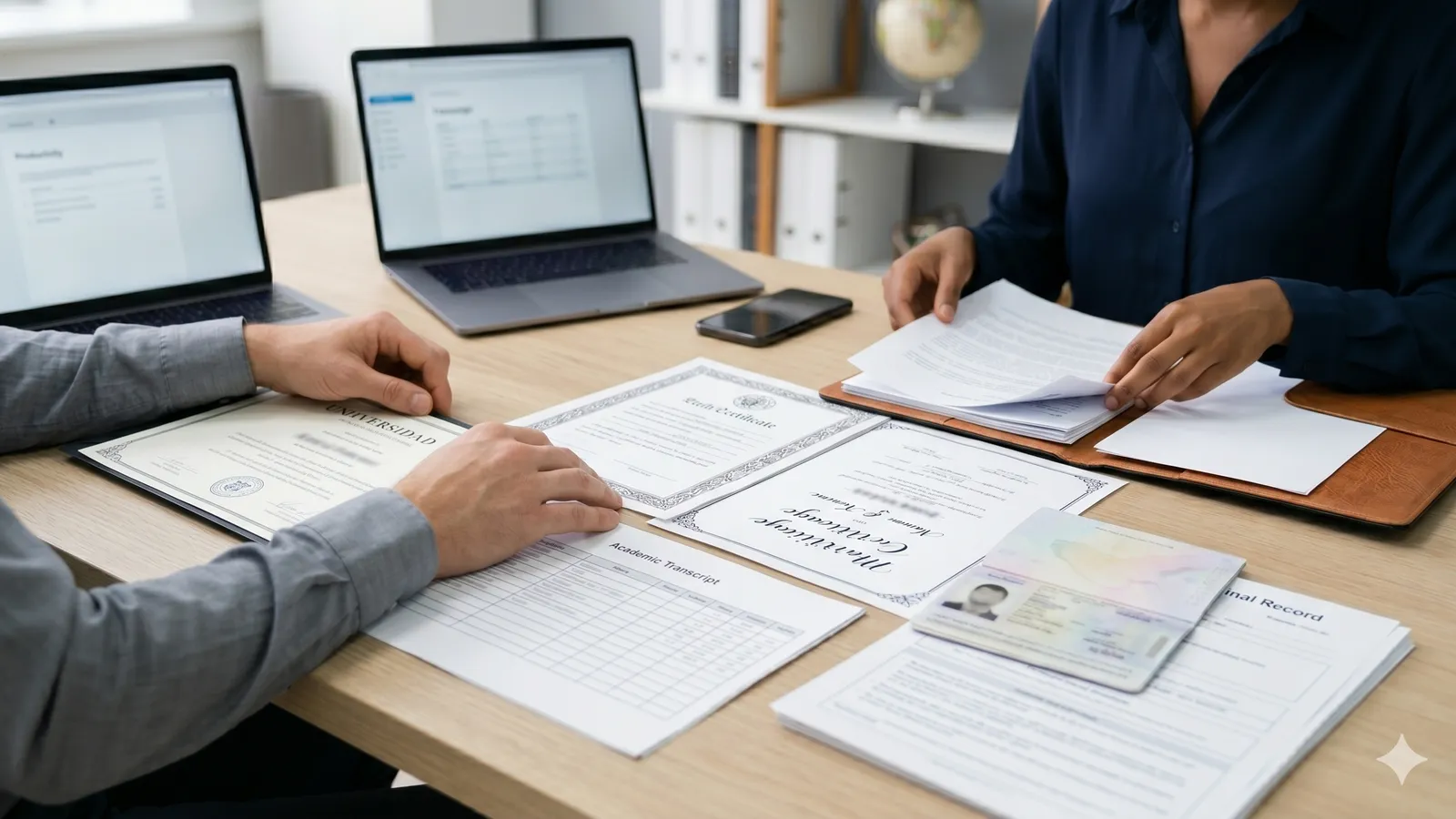
Adoption files may include a broad range of records. LinguaVox regularly translates adoption decrees, family court orders, birth certificates, guardianship certificates, consent forms, welfare reports, social services letters, administrative approvals, and civil registry annotations. These documents provide the legal and administrative background of the adoption and usually need to be translated in full when they form part of an official filing.
Accuracy matters in every section of these records. Names of all parties, adoption dates, court locations, case numbers, and legal clauses must be carried into English with care. If an adoption file contains an apostille, legalization page, amendment, or stamp on the reverse side, that material should be included in the translation request. Before the project begins, our team reviews the files to identify missing pages, illegible areas, or elements that may need clarification.
To receive a quote, upload clear scans or high-quality photographs of your adoption documents through our online form. Make sure every page is included, including attachments, amendments, annexes, and reverse sides with official stamps. If you have a large file, sending it as one complete set helps our project managers understand the context, estimate the volume correctly, and maintain consistency across the translation.
LinguaVox translates adoption documents into English from more than 150 languages, including Spanish, Mandarin Chinese, Arabic, Vietnamese, Tagalog, Korean, Russian, Portuguese, Haitian Creole, Hindi, Urdu, Farsi, and Ukrainian. Each file is assigned according to language pair, subject matter, and the country where the adoption or family record was issued.
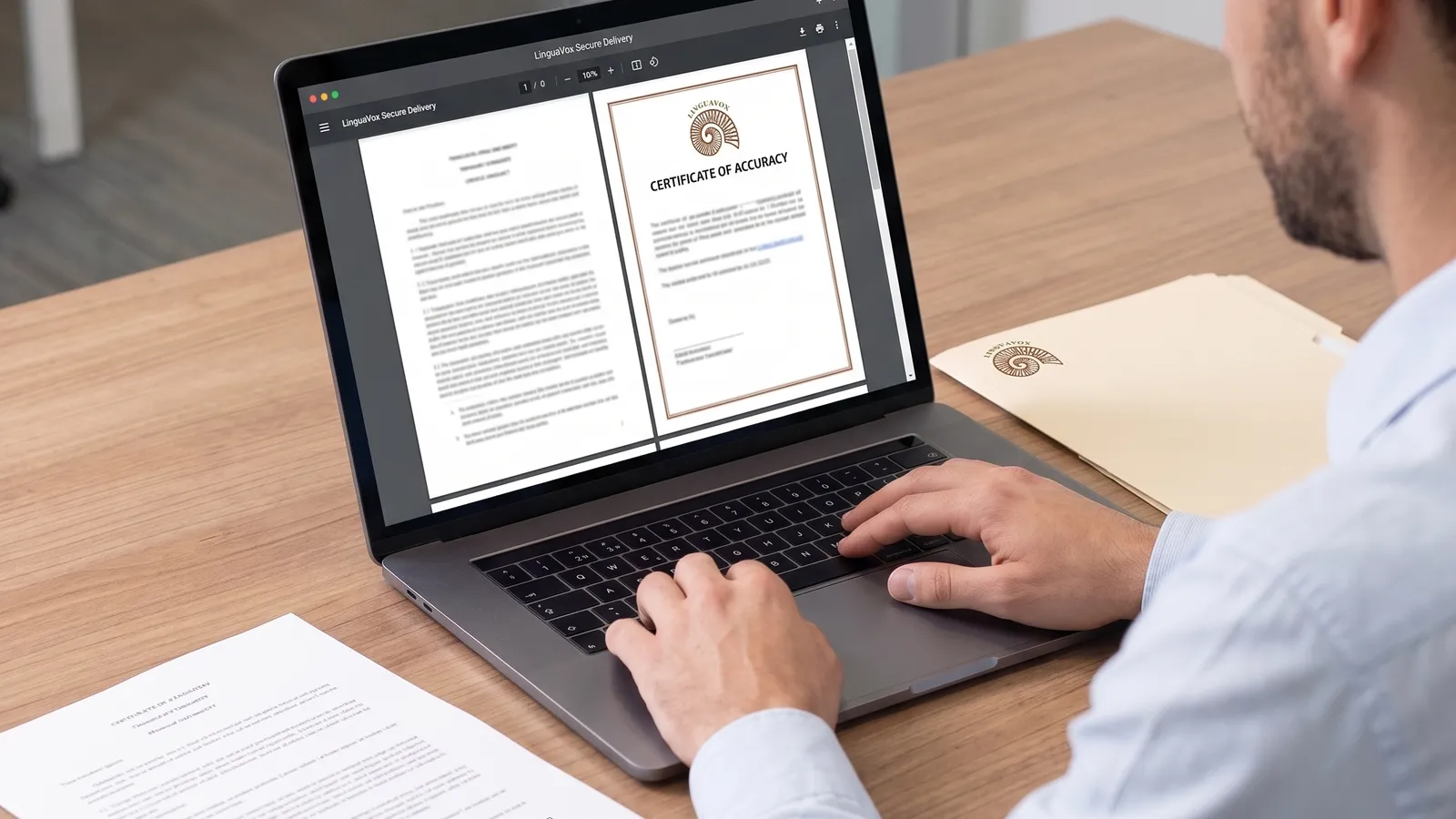
The standard delivery format for adoption document translation is a certified PDF. This digital file includes the complete English translation, a signed certification of accuracy, our company stamp, and provider information. It can be shared with attorneys, uploaded to electronic portals, or printed for paper filings when that format is accepted by the receiving institution.
If an agency, court, licensing office, or attorney specifically asks for a notarized translation, LinguaVox can arrange this additional service. We coordinate the signature of the certification of accuracy before a U.S. notary public through our contact in Michigan, and the physical documents are then mailed to your address. Because notarization adds handling time and postal costs, it should be requested only when the receiving institution's instructions require it.
Adoption records contain sensitive personal and family information, so confidentiality is part of the project from the first file review. We use secure handling procedures and limit document access to the team members involved in the translation, project management, and delivery process.
Our internal workflows are organized under ISO 9001 for traceability and file control. Translation projects follow professional quality procedures, including appropriate review steps according to the scope and service requested. For large documentation sets, our project managers also check consistency in names, dates, transliterations, and recurring legal terms across the complete file.
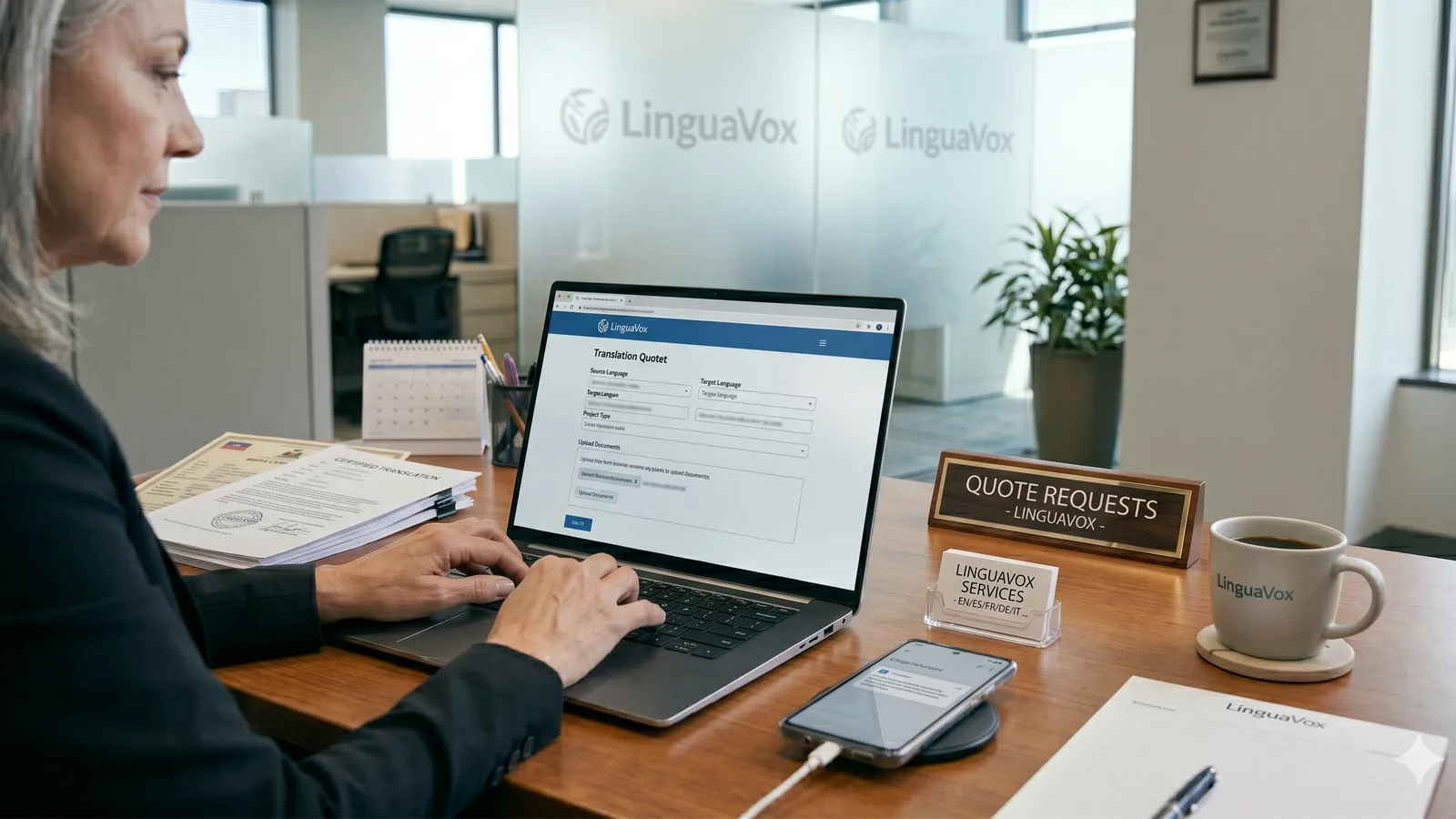
To begin, submit your scanned documents through our online request form. Indicate the source language, the target language, and the agency or institution that will receive the paperwork. Our team will review the scope, complexity, certification needs, and delivery format before sending a quote.
Quality management system focused on traceability, process organization and continuous improvement.
Specific standard for professional translation services with independent revision.
Standard used for human post-editing of machine translation when that workflow is requested.
Review related document pages if your filing includes several civil, academic, identity or financial records.
Adoption filings often include court decrees, birth certificates, guardianship records, consent forms, welfare reports, social services letters, and administrative certificates confirming the adoption.
For many official immigration and legal filings in the United States, foreign adoption documents need a complete English translation with a signed certification of accuracy. You should also check any specific instructions from your agency or attorney.
Legible text inside stamps or seals is translated. Graphic seals, signatures, and logos are shown with bracketed descriptions such as "[Court Seal]" or "[Signature of Judge]" so the reviewer can identify them in the original document.
Yes. The translation and certification process can be managed online. You can upload digital copies from any location, and we deliver the certified PDF by email unless your procedure requires a physical or notarized copy.
Usually, no. A certified PDF is commonly used for many filings. You should request notarization and postal delivery only if the specific agency, court, or attorney reviewing your case asks for a notarized document.
Turnaround times depend on the number of pages, language pair, legibility, and delivery format. Simple records can often be delivered within a few business days; large files or notarized copies require additional time.
Request a translation quote
Send the documents, specify the language and explain where the translation will be submitted. We will check whether you need certified PDF delivery, notarization or postal delivery.