 +1 347 493 3907
ISO 9001
Quality management system focused on traceability, process organization and continuous improvement.


Sworn translation services in Spain for U.S. citizens and companies. Translations by translators authorized by the Spanish Ministry of Foreign Affairs.
 ISO 9001ISO 17100
 ISO 18587
U.S. citizens, residents and companies that need to present documents in Spain often require a specific type of official translation: a Spanish sworn translation. This service is different from a standard certified translation used in the United States. Spanish authorities usually require translations signed and stamped by a Sworn Translator appointed by the Spanish Ministry of Foreign Affairs, European Union and Cooperation (MAEC).
LinguaVox coordinates sworn translation services for U.S. documents that must be presented before Spanish consulates, government offices, courts, universities, notaries and registries. This includes documents for visas, residence procedures, studies, marriage, inheritance, business registration and corporate transactions in Spain.

In the United States, a certified translation usually consists of a translation accompanied by a signed statement of accuracy from a translator or translation company. This format is common for USCIS and many U.S. procedures. Spain uses a different system.
For Spanish administrative and legal procedures, the relevant authority may require a translation issued by a Traductor-Intérprete Jurado officially appointed by MAEC. A Spanish sworn translation includes the translator’s signature, seal and registration number. These elements identify the translator as authorized to issue sworn translations for use before Spanish authorities.
A translation certified by a U.S. agency can be useful in the United States, but it may not meet the requirements of a Spanish civil registry, immigration office, university or court. For that reason, it is important to confirm the requirements of the Spanish authority or consulate before ordering the translation.
U.S. citizens applying for Spanish visas often need sworn translations of personal, financial and background records. Common examples include FBI background checks, state police records, medical certificates, bank statements, employment letters and proof of income.
For civil procedures, LinguaVox coordinates sworn translations of U.S. birth certificates, marriage certificates, divorce decrees, name change orders and adoption documents. Students and professionals may need sworn translations of diplomas, academic transcripts, professional licenses and university letters for recognition, admission or professional procedures in Spain.
Companies may also need sworn translations for articles of incorporation, certificates of good standing, powers of attorney, commercial registry documents, tax certificates and board resolutions. In corporate matters, the translation must preserve names, dates, official references and legal terminology with particular care.
Before a U.S. public document can be used in Spain, it often needs an Apostille under the Hague Convention. The apostille is not a translation. It is a certificate attached by a competent U.S. authority, such as a Secretary of State or the U.S. Department of State, to authenticate the signature or seal on the original document.
It is usually advisable to obtain the apostille before requesting the sworn translation. When the apostille is attached to the document, the sworn translator normally translates the complete package, including the apostille page. This helps avoid having to update the translation later if the Spanish authority requires the apostilled document and the apostille was not included.
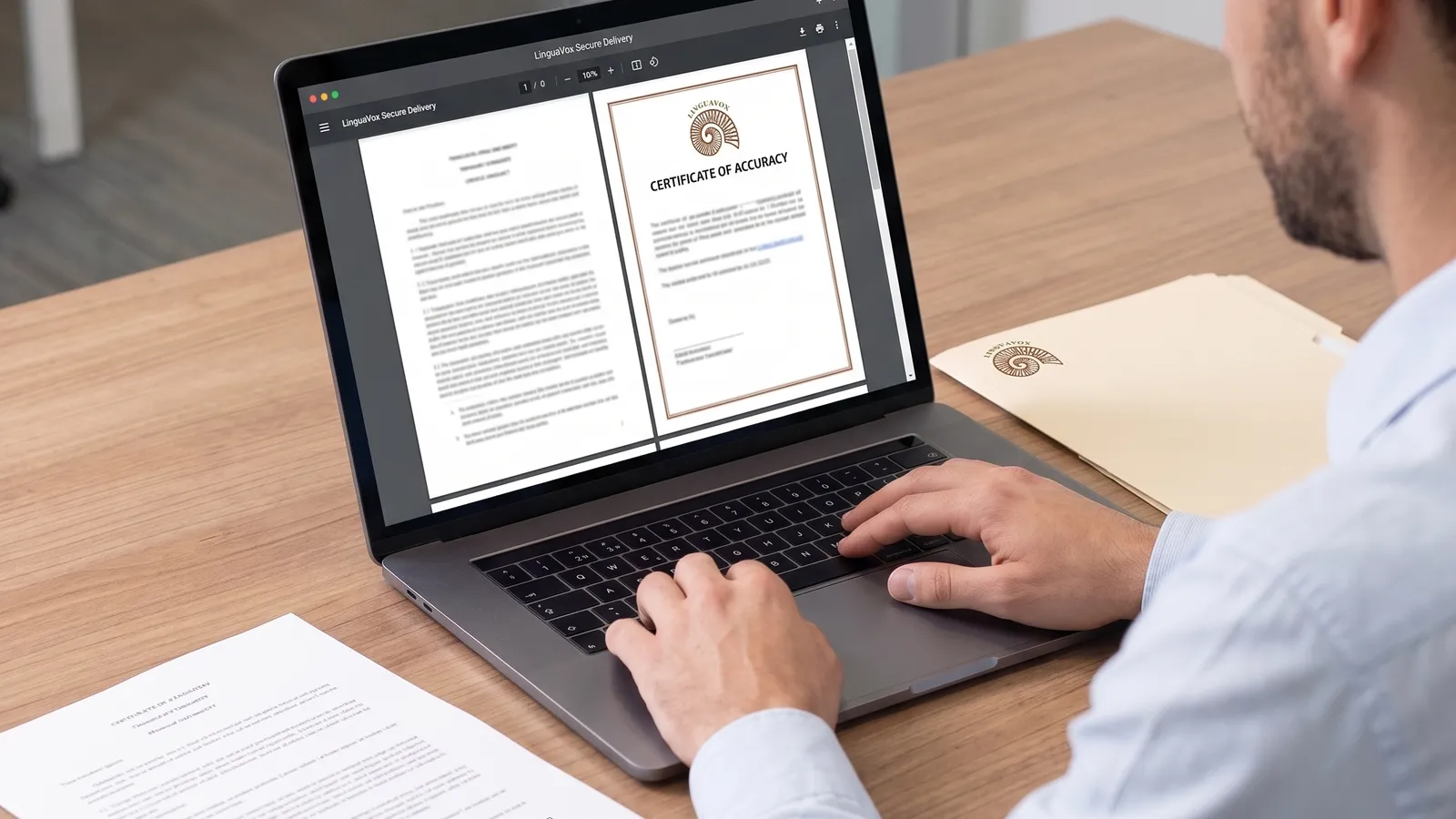
Spanish sworn translations can be delivered in different formats depending on the procedure. Some authorities and consulates accept digitally signed sworn translations in PDF format when the electronic signature is valid under Spanish rules. Other procedures may still require a paper copy with the sworn translator’s handwritten signature and seal.
LinguaVox can coordinate digital delivery and, when needed, physical delivery from Spain to the United States. Before confirming the project, we help you identify whether the destination authority expects a digitally signed PDF, a paper copy or both. The final decision always depends on the instructions of the receiving authority.

LinguaVox helps U.S. clients understand the difference between U.S. certified translation and Spanish sworn translation. We review the scanned documents, check whether apostille pages are included when needed and coordinate the work with translators authorized by MAEC.
Our internal processes are supported by ISO 9001 for project organization and ISO 17100 for professional translation workflows. These standards help us manage sensitive personal, academic and corporate documents with traceability and consistent project control.
To request a quote, send us clear scanned copies of your U.S. documents, including apostille pages or notarial certificates if they are part of the package. Tell us which Spanish consulate, authority, university, notary or registry will receive the translation. We will review the file and confirm the suitable delivery format, cost and expected timeline.
Quality management system focused on traceability, process organization and continuous improvement.
Specific standard for professional translation services with independent revision.
Standard used for human post-editing of machine translation when that workflow is requested.
Explore related services when your project combines certified translation, USCIS documents, business files, languages or state-specific delivery needs.
A U.S. certified translation usually includes a statement of accuracy from a translator or translation company. A Spanish sworn translation must be issued by a translator officially appointed by the Spanish Ministry of Foreign Affairs (MAEC), with the required signature, seal and registration details.
If the apostille forms part of the document package to be submitted in Spain, it should normally be included in the sworn translation. The sworn translator translates the document and the apostille page so the Spanish authority can review the complete file.
Many Spanish procedures accept sworn translations in digitally signed PDF format, but some offices still request paper copies with handwritten signature and seal. We can coordinate either format, depending on the instructions of the authority that will receive the document.
Spanish visa procedures often require sworn translations of FBI or state background checks, medical certificates, bank statements, employment letters and civil records such as birth or marriage certificates. The exact list depends on the visa type and consulate instructions.
ATA certification is recognized in the U.S. translation market, but Spanish authorities usually require a translator appointed by MAEC for sworn translations. If the document will be used in Spain, you should check whether the Spanish authority specifically requires sworn translation.
You can upload clear scanned PDF copies of your documents through our website. In most cases, you do not need to send physical originals for the quote. Include apostilles, notarial certificates or attached pages if they are part of the package to be translated.
Request a translation quote
Send the documents, specify the language and explain where the translation will be submitted. We will check whether you need certified PDF delivery, notarization or postal delivery.